

AMSOIL Authorized Dealer
Skip to questions

AMSOIL questions, answered simply

AMSOIL FAQ

Synthetic oil, everyday maintenance and fleet questions—answered with AMSOIL sources and clearly labeled test evidence.

AMSOIL sources checked November 10, 2026.

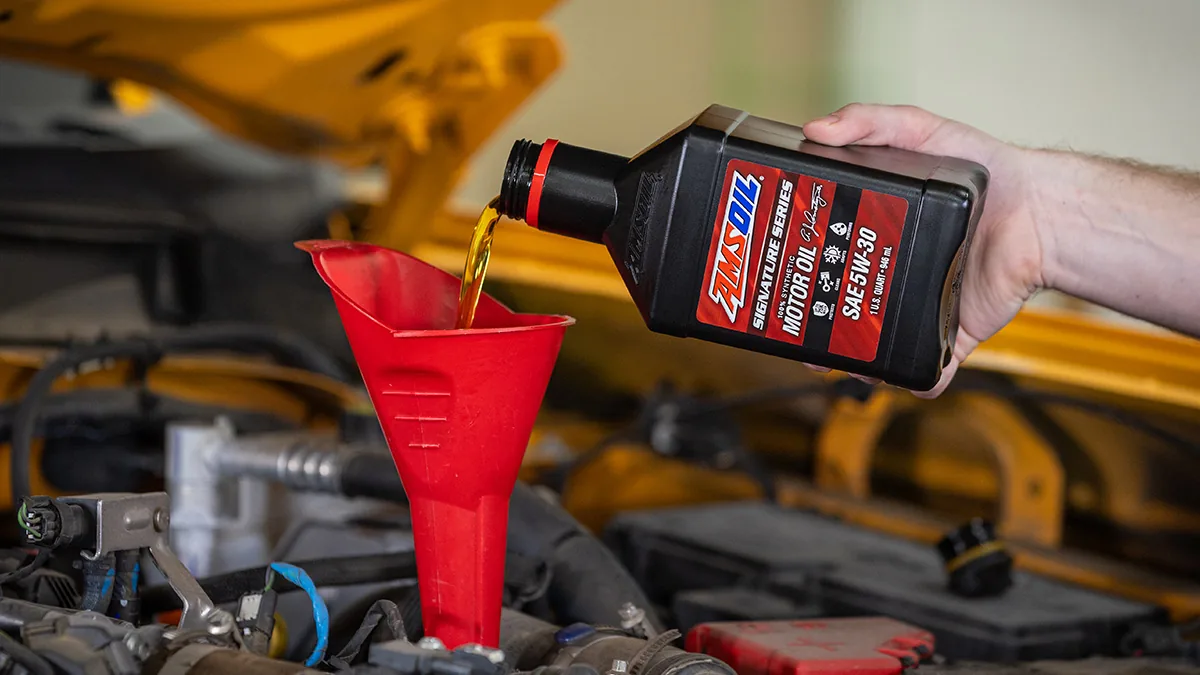
AMSOIL Signature Series motor oil being poured through a red funnel into an engine
AMSOIL Signature Series motor oilPhoto: AMSOIL

What the evidence actually shows

Each answer distinguishes manufacturer guidance from reported testing. Third-party laboratory work commissioned by AMSOIL is labeled as such—not presented as funding-independent research. Results apply to the products and conditions tested, not every oil or engine.

Value, brands & proof

Compare what the evidence shows—not blanket rankings or savings promises.

Is synthetic oil worth the extra cost?

Synthetic oil can offer worthwhile protection and maintenance benefits, but not a guaranteed financial return. Value depends on the oil, your vehicle, driving conditions and permitted service interval.

Synthetic oil can be worth considering when you value wear protection, resistance to heat and deposits, cold-temperature performance, or fewer scheduled oil changes. In an AAA study summarized by AMSOIL, five synthetic and five conventional oils were evaluated in eight industry-standard ASTM tests covering shear stability, deposits, volatility, cold pumpability and oxidation-related properties. The study reported that synthetic oils averaged 47% better performance, but the brands tested were not disclosed, so this is not a guarantee for every synthetic oil or vehicle.

The practical value depends on the specific product and how you use the vehicle. AMSOIL says its oil-change guidance varies by product and operating conditions; some products support extended intervals, while others direct owners to follow the vehicle manufacturer’s interval or oil-life monitor. Follow the owner’s manual and the product instructions. The cited official sources support performance and maintenance benefits, but they do not establish a universal financial break-even point or prove that every driver will recover the added purchase price.
Which brand of synthetic oil is best?

There is no universally proven best brand. Choose an oil that meets your vehicle’s required specification, then compare named tests, conditions and baselines. AMSOIL publishes product-specific comparisons, not an unbiased all-brand ranking.

There is no universal winner established by the cited official sources. Your owner’s manual should determine the required viscosity and performance specification first. AMSOIL’s comparison guidance says to look beyond whether an oil merely passes a specification and examine the named test, comparison baseline and conditions.

AMSOIL publishes several product-specific comparisons. For example, its performance page reports an ASTM D6335 TEOST 33C comparison of AMSOIL 0W-20 High-Mileage against identified Valvoline and Mobil 1 0W-20 products, with total deposits of 15.4 mg, 39.3 mg and 40.5 mg, respectively. It also reports an ASTM D5293 cold-cranking comparison of AMSOIL 0W-20 Hybrid and Mobil 1 0W-20 Hybrid. These are manufacturer-published results from independent or third-party testing as described by AMSOIL; they apply to the named products and purchased batches, not every oil from a brand.

The archive separately warns that historical tests may be obsolete and may not represent oils currently on the market or later reformulations. Therefore, the sources support comparing a specific oil in a specified test, not declaring one brand best in every vehicle or use case.

Are store brands like Costco Kirkland and Walmart SuperTech as good as name brands?

The cited AMSOIL sources do not establish whether Kirkland or SuperTech performs as well as any name brand. They explain that specifications set minimum requirements, so matching a certification does not prove identical performance.

AMSOIL’s specifications guide says two lubricants recommended for the same specification do not necessarily provide equal performance or protection because they have met only the minimum requirements. It recommends choosing the viscosity and specifications listed in the vehicle owner’s manual.

The official AMSOIL sources reviewed here do not publish a verified, brand-specific head-to-head test of Costco Kirkland or Walmart SuperTech against a named brand. They describe how tests such as viscosity, high-temperature/high-shear, cold-cranking and wear testing can evaluate particular properties, but those methods do not by themselves answer this specific brand comparison.

AMSOIL does publish its own product-specific results, including Signature Series results in named tests and a Ford F-150 Raptor accumulation study. Those results support claims about the tested AMSOIL product, test method and application; they do not establish that Kirkland or SuperTech is equivalent or inferior.

Does synthetic oil improve fuel economy?

It can, but there is no universal MPG guarantee. The potential benefit depends on the vehicle-approved viscosity, oil formulation and operating conditions—not simply the word synthetic.

AMSOIL explains that lower-viscosity oil generally takes less energy to pump and creates less resistance as engine parts move. Synthetic formulations can also flow more readily during cold starts, when thicker oil increases the effort needed to circulate lubricant. Those mechanisms can improve efficiency, but changing viscosity is not the same as proving a fixed MPG gain; always use the viscosity and specification required by the vehicle manufacturer.

AMSOIL’s official archive identifies an independent-laboratory fuel-efficiency study of AMSOIL products in Class 8 diesel trucking applications. That is a specific commercial-vehicle test, not a universal result for passenger cars or every synthetic oil. The retrieved archive summary does not establish enough detail about the full test method, product set or comparison baseline to support a general numeric claim.

Oil basics

Understand synthetic labels, blends and base-oil groups.

What’s the difference between full synthetic, synthetic blend and conventional oil?

Conventional oil uses petroleum base oils; full synthetic uses engineered synthetic base oils; synthetic blend combines conventional and synthetic base oils. The right choice still depends on your vehicle’s required viscosity and specification.

Conventional motor oil uses base oils refined from crude petroleum. Full synthetic oil uses chemically engineered base oils made with more uniform, purpose-selected molecules. AMSOIL says base oils are only part of an oil’s formulation: additives also affect protection and performance. Synthetic blends, also called semi-synthetics, combine conventional and synthetic base oils.

A blend is not defined by a universal minimum percentage of synthetic base oil, so its characteristics can vary with the formulation. AMSOIL describes blends as sitting between conventional and full synthetic on the motor-oil spectrum, but the label alone does not establish a specific performance level. Choose an oil that meets your owner’s manual’s viscosity and required specification; the cited sources do not establish one oil type as the right choice for every engine.

Is “full synthetic” really synthetic? What’s the difference between Group III and PAO base oils?

Yes. Group III oils can legitimately be marketed as synthetic, while PAO is the distinct Group IV synthetic base oil. “Full synthetic” does not by itself mean an oil is entirely PAO.

“Full synthetic” is a legitimate description when the formulation uses synthetic base oils; it is not a synonym for “made entirely from PAO.” AMSOIL explains that Group III base oils are highly processed, reconstructed molecules and may be called synthetic in most countries. Group IV base oils are polyalphaolefins (PAO), chemically engineered synthetic base oils with different properties.

The groups are not interchangeable labels, and base oil type alone does not determine how a finished lubricant performs. AMSOIL says the complete formulation—including additives—and the performance shown in relevant tests matter more than focusing on one ingredient. It also says AMSOIL keeps specific base-stock details proprietary and selects a base stock or combination to meet application-specific performance goals. Therefore, these sources do not establish that every AMSOIL oil is entirely PAO; they support judging the product by its stated specifications and demonstrated performance instead.

Choose the right oil

Match viscosity, performance specifications and approvals to your vehicle.

Which viscosity do I need? Can I use 5W-30 instead of 0W-20?

Use the viscosity and specification in your owner’s manual. Do not assume 5W-30 is an approved replacement for 0W-20; follow any alternatives expressly listed for your engine.

Start with the owner’s manual or an application guide. AMSOIL explains that the “W” number describes cold-temperature behavior, while the second number describes viscosity at 100°C (212°F). A 5W-30 is thicker than a 0W-20 at operating temperature, so the grades are not interchangeable by definition. AMSOIL says engines designed for 0W-20 can have tight clearances and systems calibrated for that grade; some manuals list more than one approved viscosity for climate or towing conditions.

If 5W-30 is not listed as an approved option, use the specified 0W-20. AMSOIL says that using one viscosity grade higher or lower in a pinch generally will not cause lasting harm, but recommends returning to the manual’s grade at the next oil change. The cited AMSOIL sources do not establish that 5W-30 is an approved replacement for every engine calling for 0W-20, so check the vehicle-specific specification rather than assuming a substitution is safe for routine use.

What do API SP, ILSAC GF-6, dexos and manufacturer approvals mean, and which do I need?

API SQ and ILSAC GF-7 are the current gasoline-oil standards; API SP/GF-6 are legacy specifications. Dexos is GM’s proprietary specification. Use the viscosity and specification in your owner’s manual, then verify the exact product data sheet.

API service categories are industry performance standards for gasoline engines, while ILSAC standards add requirements focused on fuel economy, robustness and emissions-system protection. AMSOIL says API SQ and ILSAC GF-7 were first licensed on March 31, 2025, replacing API SP and GF-6. GF-7A covers traditional grades; GF-7B covers SAE 0W-16. Both meet API SQ, but the correct viscosity still matters.

Dexos is GM’s proprietary oil-specification family, not a synonym for API or ILSAC. AMSOIL’s current guidance identifies dexos1 Gen 3, dexos R, dexos2 and dexosD as GM’s current specifications, and says dexos1 Gen 3 replaced Gen 2. If your manual calls for dexos, use the specified viscosity and a product identified as licensed or otherwise expressly recommended for that dexos application. A statement that an oil meets or exceeds a performance requirement is not, by itself, a claim that every AMSOIL product is licensed by GM.

Start with the vehicle owner’s manual or AMSOIL’s vehicle lookup, then check the individual product data sheet. Manufacturer recommendations and approvals are application-specific; do not assume that one approval applies to every AMSOIL line or viscosity. The cited AMSOIL sources support selected current grades and products, not a universal dexos license for all AMSOIL oils.

My car doesn’t require synthetic. Should I use it anyway?

You can choose synthetic oil if it meets your vehicle’s required viscosity and performance specifications. AMSOIL says switching from conventional oil requires no special preparation; that is not a universal savings guarantee.

A car does not have to require synthetic oil for you to choose it. AMSOIL says properly formulated synthetic oils can provide benefits beyond conventional and synthetic-blend oils, including a more durable oil film for wear protection and better performance across extreme temperatures. Use the viscosity and performance specifications listed for your vehicle when selecting any oil.

Switching is straightforward: AMSOIL says you can simply change the oil, with no special preparation required. Its published summary of an independent AAA study reports that five synthetic and five conventional oils were compared across eight industry-standard ASTM tests, with synthetic oils performing an average of 47% better; the tested oil brands were not disclosed, so that result does not establish that every synthetic oil or a specific AMSOIL product will perform identically.

Using & changing oil

Intervals, older engines, mixing and warranty questions.

How often should I change synthetic oil—by miles or by months?

Use your vehicle manufacturer’s recommendation or oil-life monitor as the baseline, and follow the oil label’s mileage and time limit—whichever comes first. Severe service may require a shorter interval.

There is no single mileage figure for every synthetic-oil application. Start with the interval in your owner’s manual or the vehicle’s oil-life monitoring system. AMSOIL explains that oil-life monitors estimate oil life from factors such as mileage, idle time, engine temperature, trip length, load and starts, so driving conditions affect the result. The 3,000-mile rule is not a universal requirement.

Then check the specific oil and service conditions. For example, AMSOIL lists Signature Series Synthetic Motor Oil for up to 25,000 miles, 700 operating hours or one year in normal service, whichever comes first, and up to 15,000 miles, 700 hours or one year in severe service. Those are product-specific recommendations, not a claim that every synthetic oil can use the same interval. Severe service includes excessive idling, frequent towing or hauling, plowing, dusty driving, and commercial or fleet use.

Can I switch to synthetic in an older or high-mileage engine? Will it cause leaks?

Yes. You can generally switch directly to synthetic oil. It does not create worn seals, but its cleaning action may expose an existing leak; high-mileage oils include seal conditioners to help aging seals.

You can generally switch an older or high-mileage engine directly from conventional oil to synthetic; AMSOIL says no special pre-switch procedure is required. In an engine with accumulated sludge or deposits, synthetic detergents may clean that material over successive oil changes. An optional flush cleans more immediately, but it is not required.

Synthetic oil does not make a healthy engine leak simply because it is synthetic. However, deposits and varnish in an older, poorly maintained engine can temporarily cover worn or cracked seals. When cleaning removes that material, an existing weakness may become visible. Age, heat, mileage and storage can also harden seals. AMSOIL says high-mileage oil uses seal conditioners intended to help restore or recondition aging seals and help stop leaks; that is maintenance support, not a guarantee that damaged seals will be repaired.

Can I mix synthetic and conventional oil, or switch back?

Yes. Synthetic and conventional motor oils are compatible, so mixing or switching back is safe. However, AMSOIL recommends avoiding routine mixing and does not support extended drain intervals after oils are mixed.

Synthetic and conventional motor oil can be mixed without creating an engine danger because their components are compatible. AMSOIL says mixing is best avoided except when necessary, since adding conventional oil dilutes the synthetic oil's performance benefits. If you must top off with conventional oil, change the oil at your earliest convenience.

AMSOIL also says it is safe to switch to conventional oil after using synthetic oil; no special procedure is required for changing from conventional to synthetic oil, either. Follow the vehicle manufacturer's required viscosity and specifications. Because mixed oils have a shorter expected service life, AMSOIL does not support extended drain intervals when oils have been mixed.

Will a different oil brand, or changing it myself, void my warranty?

In the U.S., using another oil brand or doing the oil change yourself does not automatically void a factory warranty. Follow the vehicle maker’s specifications, keep service records, and do not assume coverage for damage caused by incorrect oil or extended drains.

For U.S. factory warranties, AMSOIL says manufacturers generally cannot tie warranty coverage to a particular parts or lubricant brand unless they provide that item free of charge. It also says a manufacturer cannot deny coverage without showing that the aftermarket part or lubricant caused the failure. That protects brand choice; it is not a promise that every oil-related failure will be covered, especially if the oil was wrong for the application or maintenance was neglected.

You may change the oil yourself. AMSOIL’s DIY guidance says to use the viscosity and amount specified in the owner’s manual, install the filter correctly, tighten the drain plug to the manufacturer’s specification, check for leaks and verify the final level. Keep receipts and other service records because AMSOIL recommends proof of maintenance when a warranty claim is needed. If oils are mixed, AMSOIL says the mixture should not be used for an extended drain and recommends changing it at the earliest convenience. AMSOIL’s statements are general information, not individual legal advice; read the applicable warranty and consult a qualified adviser for a disputed claim.

Businesses & fleets

Application-specific drain validation and actual maintenance economics.

Can synthetics safely extend our drain intervals, and how do we prove it with oil analysis?

Sometimes—but not blindly. Match the vehicle, oil, filter, fuel, emissions system and service severity to OEM and product guidance, then extend one application at a time using repeated oil-analysis trends.

Synthetic oil does not make every fleet eligible for the same interval. AMSOIL identifies commercial and fleet vehicles, excessive idling, towing, hauling, plowing and dusty driving as severe service, and its guidance varies by product, filter and engine. Modified engines and some alternative-fuel applications are excluded from certain extended-drain recommendations. Start with the owner’s manual, product instructions and the actual duty cycle; do not roll one vehicle’s result across the fleet.

To prove an interval, establish a consistent baseline and sample at regular intervals under comparable operating conditions. AMSOIL says laboratory reports can assess wear metals, fuel dilution, coolant, dirt, soot, water, viscosity, TBN, oxidation and nitration. One sample is a snapshot; three or four regular samples reveal whether wear and contamination are stable or rising. Use those trends, along with service records and any abnormal findings, to decide whether to hold, shorten or cautiously extend the next interval.

Fuel and emissions conditions matter. AMSOIL warns that biodiesel can increase soot and oil degradation, recommends oil analysis for drivers seeking extended intervals, and says intervals beyond OEM recommendations should be supported by analysis. Its fire-department customer story reports changing a generator based on oil analysis, but that is a single customer account—not proof that every fleet can duplicate the result.

Will synthetic lower our total maintenance cost enough to justify paying 2–4× more, given our duty cycle and diesel emissions equipment?

Possibly, but there is no universal multiplier or ROI guarantee. AMSOIL’s official guidance points to fewer oil changes, less waste and oil analysis; your fleet’s recorded labor, downtime, parts and service results must establish payback.

The cited sources do not establish a universal synthetic-oil price multiple or payback. For diesel equipment, match the exact oil and filter to the engine, fuel, emissions system and severe-service requirements. Do not apply a gasoline motor oil’s advertised mileage limit to a diesel fleet; use the diesel product’s own recommendations and OEM requirements.

AMSOIL says oil analysis can track lubricant condition, contamination and wear and support preventive maintenance. Its customer story describes a Cummins-powered generator using oil-analysis-based changes, but that is one reported operation—not a controlled fleet-cost study. Named diesel wear and cleanliness tests do not, by themselves, prove lower total maintenance costs or emissions-system savings.

Evaluate the proposed oil with each unit’s actual oil, filter, labor, analysis, downtime, repair and waste-handling records over a defined period. A result must be established for your duty cycle and equipment; the cited sources do not guarantee recovery of a 2–4× purchase-price premium.

Need help finding your product?

Check the official application guide, or request a catalog through SyntheticsTX.

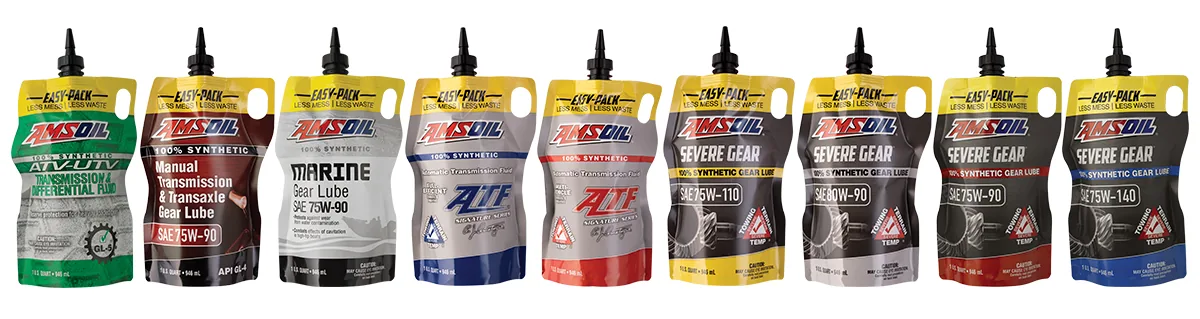
A selection of AMSOIL lubricants in Easy-Pack pouches
AMSOIL Easy-Pack product rangePhoto: AMSOIL

SyntheticsTX · Independent AMSOIL Dealer

Esteban Alvarez · Georgetown, Texas · Dealer #5533650

(512) 766-4963

These are sourced explanations from an independent dealer, not an AMSOIL corporate website.

Product-specific instructions and your vehicle's requirements take precedence.